

U.S. Navy veteran-turned-mentor says ‘learning comes from doing’
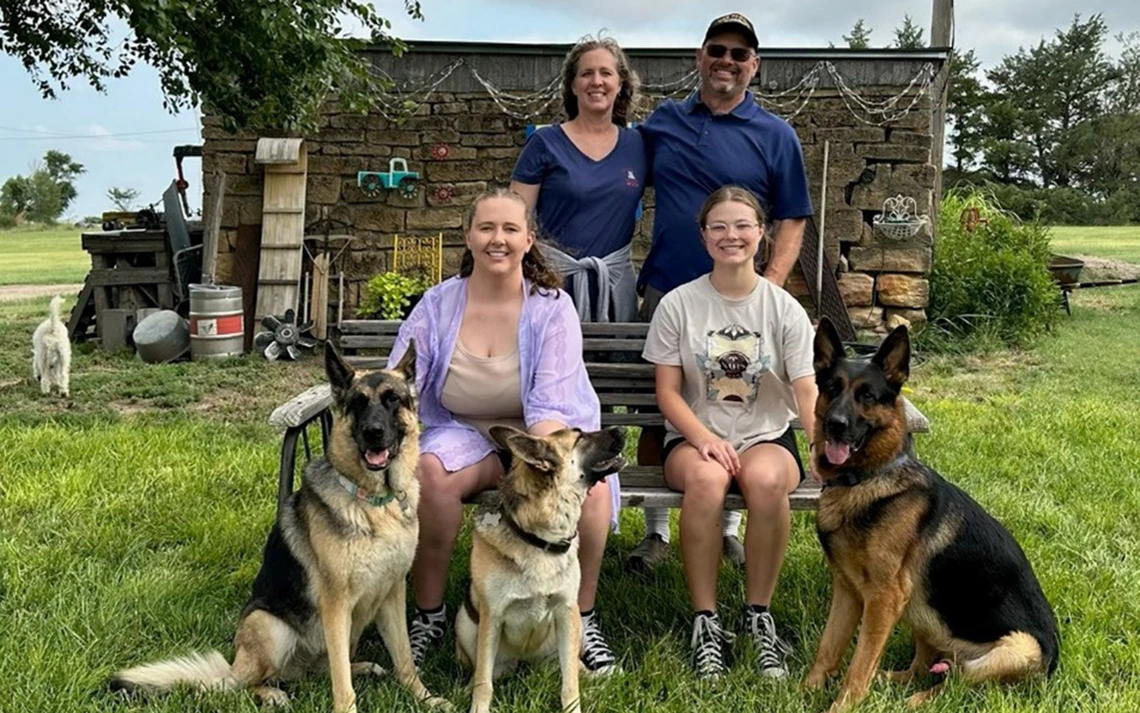
New Interdisciplinary Capstone mentor Mitch Moffet enjoys spending time with his wife of 27 years, two daughters and three German shepherds when he's not helping seniors with their projects. ‘I am presently restoring a 1960 F100 pickup truck with my 16-year-old daughter for her first vehicle,’ he says.
Mitchell Moffet

Interdisciplinary Capstone mentor Mitchell Moffet.
The Interdisciplinary Capstone program welcomed Mitchell Moffet as the newest mentor at the start of the fall 2025 semester. He is a defense engineering specialist with over 34 years of experience working for the Department of Defense and the Department of Energy. Moffet brings exceptional wisdom in aerospace and mechanical engineering to the program. He served as an Engineering Fellow at Raytheon Technologies, leading payload development for critical hypersonics programs.
Before that, he spent 18 years at Lawrence Livermore National Laboratory (LLNL) developing advanced systems for the Navy and Air Force. He holds a master's degree in mechanical and aeronautical engineering from UC Davis and began his career as an electrical technician and supervisor in the U.S. Navy.
He completed his bachelor’s degree in mechanical engineering at the University of the Pacific.
What inspired you to participate as a mentor?
Wanting to give back. Throughout my engineering career, I've specialized in research and development – first at LLNL and later at Raytheon. My work consistently involves taking projects from initial napkin sketches and guiding them to valuable outcomes. When I discovered the capstone instructor opening, it struck me as an ideal match for my background and expertise.
How do you set students up for success?
I provide ideas and options, but learning comes from doing. It's important to allow trial and error.
Why do you think it's important for students to work on design teams?
No other course prepares you for industry like the capstone course. Engineers are working in teams to solve real problems without step-by-step instructions. You experience real deadlines and collaborate with teammates to design and deliver a project.
Did you have an experience early on in your career that taught you the value of mentorship?
At every workplace throughout my career, I have benefited from the mentorship of experienced colleagues who possessed deep expertise in their fields. Their guidance consistently provided insights beyond what I could obtain from textbooks, helping me understand the importance of integrating knowledge rather than isolated skills.